

Executive functioning skills are like the control center in your brain. They help you start tasks, stay organized, remember directions, manage your emotions, and adapt when plans change.
Everyone’s brain works differently. For some students, executive functioning feels natural; for others, it takes more support. If you’re neurodivergent, you may find some of these skills tricky and that’s okay. It doesn’t mean you’re not smart or capable. It just means your brain works in its own way, and you might need different supports.
Here are the seven areas of executive functioning, with ideas for what you might need and what teachers can provide to help you thrive.
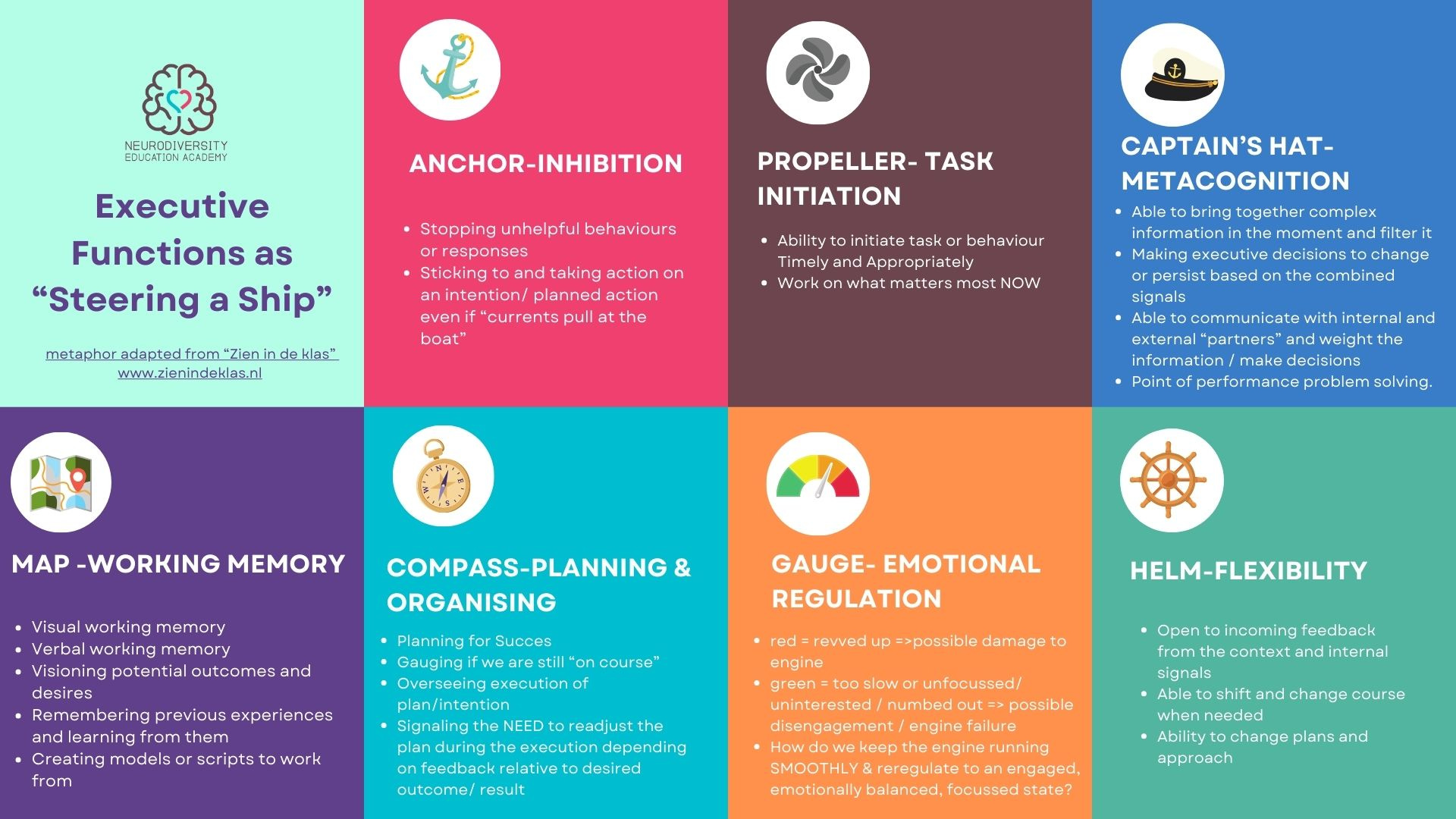
1. Anchor – Inhibition
Pausing before acting, resisting impulses, and filtering distractions.
During math, Jordan blurts out answers before the teacher finishes asking the question. Sometimes classmates get frustrated, and Jordan feels embarrassed. One day, the teacher gives Jordan a small card that says “wait 5 seconds” to hold during c…
